Castles II: Siege & Conquest
by Quicksilver Software Released 1992 1 views
Quick facts
- Developer
- Quicksilver Software
- Publisher
- Victor Entertainment
- Released
- 1992
- Platforms
- DOS, Mac, PC (Microsoft Windows)
- Genres
- Role-playing (RPG), Simulator, Strategy
- Themes
- Historical
- Game modes
- Single player
- Age rating
- USK: 0, ESRB: E
Our verdict
Castles II is the sequel that turned castle building into a full game of thrones. It's not perfect, but it's one of the more interesting medieval strategy games of the early 1990s and well worth a look.
Castles II expands the castle-building formula from the first game into a full strategy game about medieval power. The king of a fictional kingdom is dead, and several noble houses compete to take the throne through war, diplomacy and political maneuvering. You still build castles, but this time they’re just one part of a much bigger struggle.
Gameplay
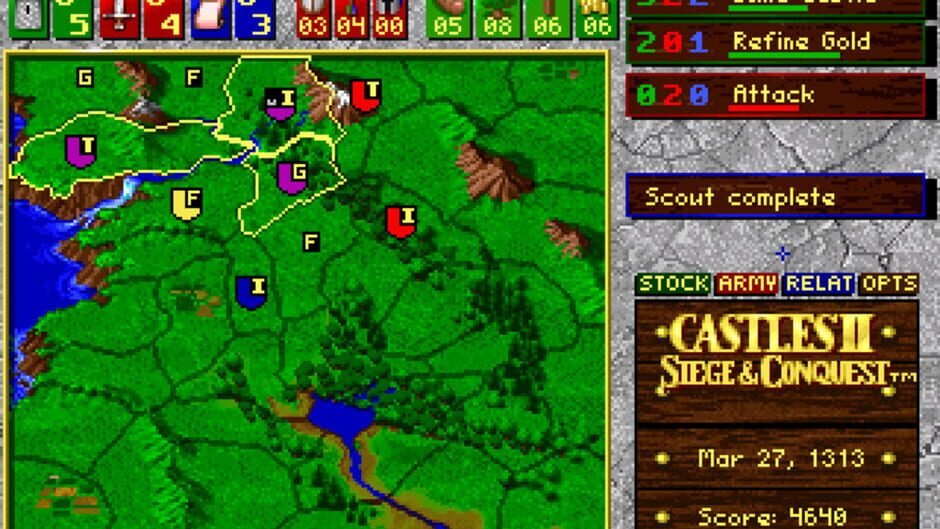
The game takes place on a territorial map, where you conquer and manage provinces in real time, pausing whenever you need to. Your actions are divided into three areas:
- Administration: Gather resources such as food, wood, iron and gold, develop your territories and keep the economy running.
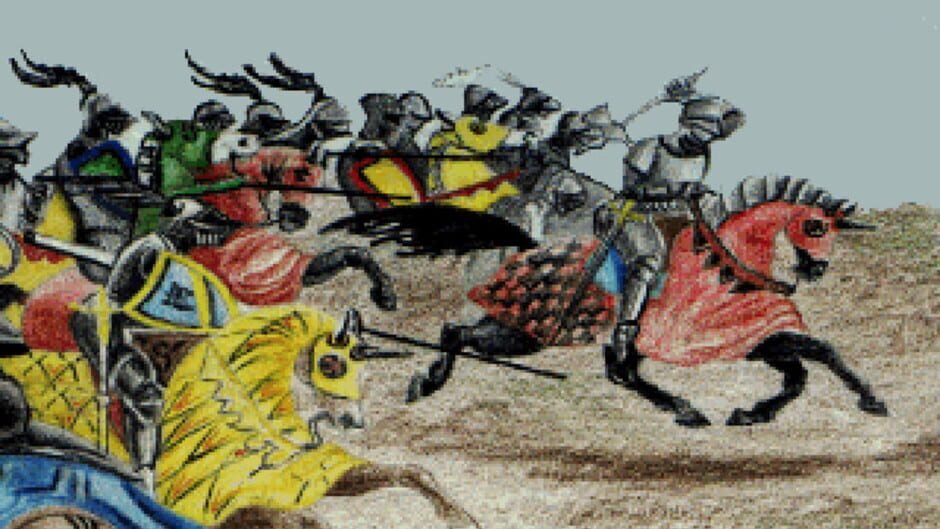
- Military: Raise armies, attack neighbours and defend your lands. Battles can be resolved on a tactical battle screen.
- Politics: Send envoys, form alliances, make threats and seek the support of powerful institutions, including the Church, to strengthen your claim to the throne.
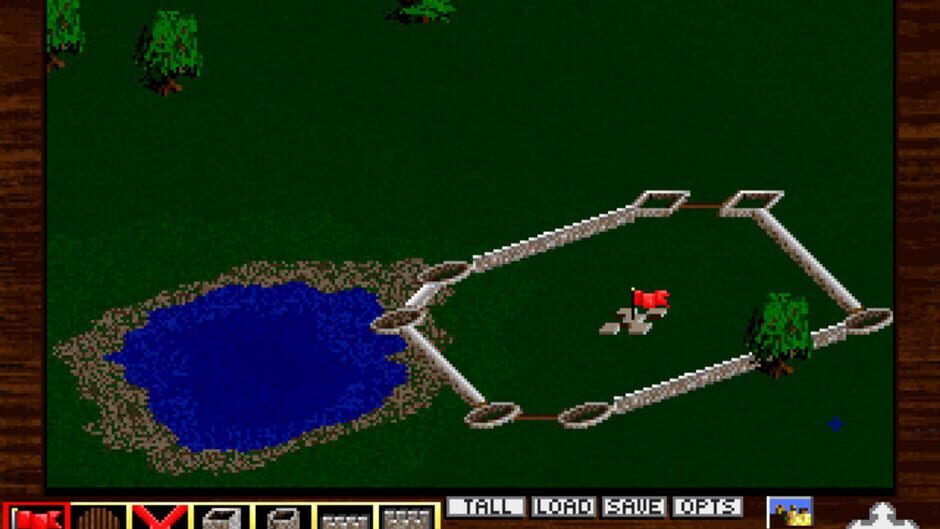
Each area has limited capacity, so you have to prioritise carefully between developing, fighting and negotiating. Castle building returns as a key way to secure your territories, with sieges and defences that matter for the war.
Story events and political dilemmas appear along the way, adding character and forcing difficult choices. Rival houses act independently, forming alliances and stabbing each other in the back as the power balance shifts.
Verdict
Castles II is a more ambitious and strategic game than its predecessor, with a nice mix of war, economy and politics. The interface can be fiddly, and the castle building is less central than in the first game, but the struggle for the throne is engaging and replayable.
The Good
- A broader strategy game with war, economy and politics
- An engaging struggle for the throne against rival houses
- Limited capacity forces meaningful priorities
- Castle building and sieges still play an important role
- Story events and dilemmas add character
- Good replay value
The Bad
- Castle building is less central than in the first game
- A fiddly interface with many menus
- Simple battles without much tactical depth
- Rival houses' behaviour can feel random
- Dated graphics and presentation today
Screenshots