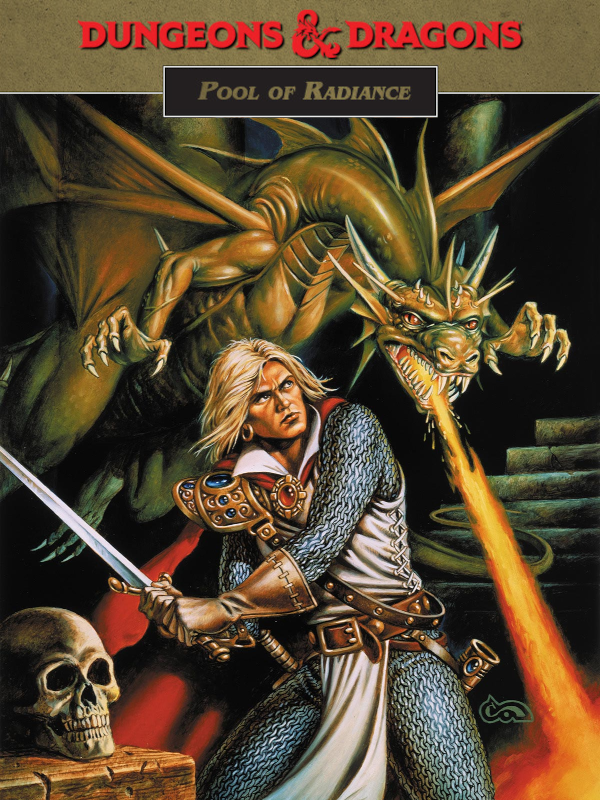
Advanced Dungeons & Dragons: Pool of Radiance
by Strategic Simulations Released 1 Oct 1988 4 views
Quick facts
- Developer
- Strategic Simulations
- Publisher
- Pony Canyon, Strategic Simulations
- Released
- 1 Oct 1988
- Platforms
- Amiga, Commodore C64/128/MAX, DOS, Mac, PC (Microsoft Windows)
- Themes
- Fantasy
- Game modes
- Single player
Our verdict
Pool of Radiance is more history lesson than modern entertainment, but a very rewarding one. If you have the patience for its old systems, you'll see exactly why so many RPGs since have tried to recapture what it started.
Pool of Radiance was the first official computer game based on the Advanced Dungeons & Dragons rules and the first of SSI’s legendary “Gold Box” games. It set the template for a whole generation of RPGs. The premise is simple: the ruined city of Phlan, on the shores of the Moonsea in the Forgotten Realms, is trying to rebuild, and the city council hires adventurers to reclaim it block by block from the monsters that have overrun it.
Gameplay
You create a party of up to six characters, choosing from races such as humans, elves, dwarves, halflings, gnomes and half-elves, and classes such as fighter, cleric, magic-user and thief. Non-humans can also multi-class. The faithful use of the AD&D rules was a big deal at the time, and it still gives the game a pleasant tabletop feel.
The game loop has three parts:
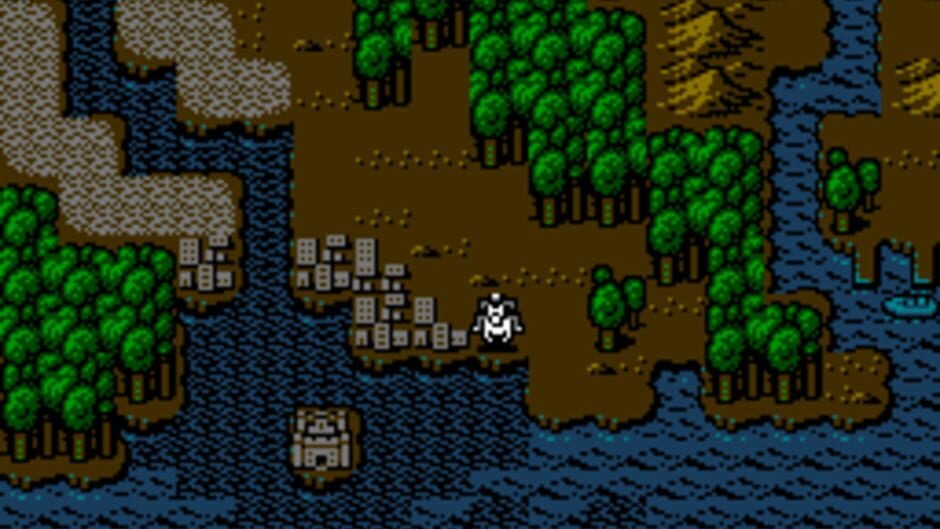
- Exploration happens in first-person, through Phlan’s ruined districts and the wilderness beyond.
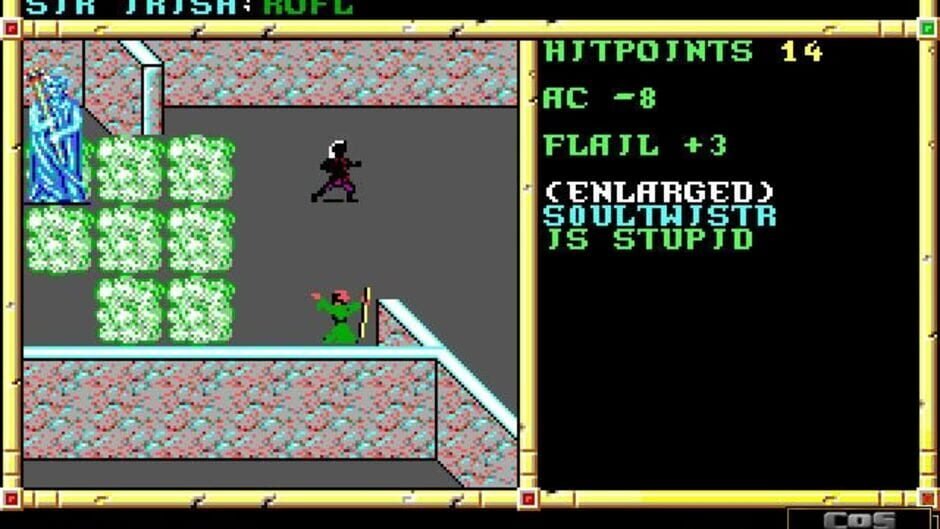
- Combat switches to a tactical, turn-based overhead grid, where positioning, spellcasting and focus fire decide the outcome.
- Downtime in town means resting to memorise spells, training to level up, and taking on new commissions from the council.
The structure is unusually open for its time. You choose which parts of the city to clear and in what order, and the game rewards careful planning and patient play.
Verdict
Pool of Radiance is the foundation that the Gold Box series and much of the Western RPG genre were built on. It feels slow and old-fashioned today, and the early hours are harsh, but the tactical combat still holds up well.
The Good
- Pioneering, faithful AD&D rules on a computer
- Satisfying tactical turn-based combat
- An open, non-linear campaign in a city you liberate step by step
- Strong sense of progression as your party grows
- Your characters can be transferred to Curse of the Azure Bonds
The Bad
- A brutal start where low-level characters die easily
- A clunky interface and a lot of menu navigation
- Spell memorisation and resting can feel tedious
- A low level cap limits how far your characters can grow
- Much of the story is in the manual's journal entries
Trailer

Screenshots